


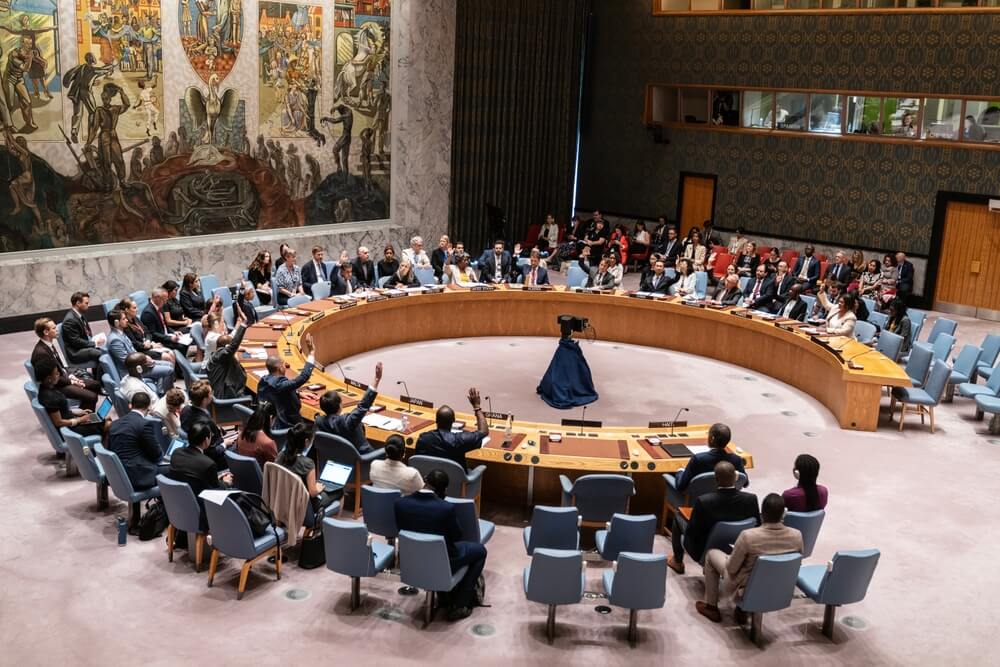
The United Nations has voted to establish a 40-member international scientific panel to examine the risks and opportunities of artificial intelligence, a decision that passed despite firm opposition from the United States. The resolution was approved by the UN General Assembly in a 117-2 vote, with the U.S. and Paraguay voting against it and Tunisia and Ukraine abstaining. Russia, China and several European nations supported the measure.
UN Secretary-General Antonio Guterres described the initiative as a crucial milestone in building a shared global understanding of AI. He said the new body would provide independent, science-based analysis at a time when the technology is advancing at extraordinary speed.
A First-of-Its-Kind Global AI Panel
The newly formed Independent International Scientific Panel on Artificial Intelligence will produce an annual report assessing AI’s risks, benefits and broader societal impact. According to the UN, it will be the first global scientific body dedicated entirely to AI.
Guterres said the panel is meant to fill a gap in international governance. In his view, many countries lack the technical resources to keep pace with AI developments. By offering rigorous and impartial analysis, the panel aims to help all member states participate more equally in global discussions about the technology’s future.
The 40 experts were selected from more than 2,600 applicants following an independent review process involving multiple UN bodies and the International Telecommunication Union. Members will serve three-year terms. Europe holds 12 seats, with representatives from countries including France, Germany, Spain, Poland and Finland.
Growing Alarm Inside the AI Industry
The UN’s move comes amid rising concern from within the AI sector itself. Former employees of major technology firms have publicly voiced fears about the direction the industry is taking.
Mrinank Sharma, a former safety researcher at Anthropic, warned in an open letter that rapid AI development, combined with other global crises, puts the world “in peril.” Meanwhile, Zoe Hitzig, formerly a senior researcher at OpenAI, told The New York Times she has “deep reservations” about her previous company’s strategic approach.
Prominent figures in the field have also urged caution. Dario Amodei, Sam Altman and Steve Wozniak have all publicly highlighted the potential dangers of advanced AI systems, calling for stronger oversight and safeguards.
U.S. Pushback and Debate Over Authority
Despite broad support, the initiative has drawn sharp criticism from Washington. Lauren Lovelace, representing the United States, described the panel as “a significant overreach of the UN’s mandate and competence.” She argued that AI governance should not be dictated by the United Nations.
The disagreement reflects a wider debate about who should shape global AI policy — national governments, private companies or international institutions. With AI increasingly influencing economies, security and daily life, the UN’s new panel is set to play a central role in that conversation over the coming years.

