Close Menu
Chicago Times Herald
    What's Hot

    BP Braces for Up to $5bn Green Energy Write-Down as Strategy Shifts Back to Fossil Fuels

    January 14, 2026

    Global Tensions Take Center Stage as Economic Warfare Becomes Top World Risk

    January 14, 2026

    MrBeast’s Beast Games Tops U.S. Charts

    January 14, 2026
    Facebook X (Twitter) Instagram
    Chicago Times Herald
    • News
    • Media
    • Health
    • Sports
    • Education
    • Entertainment
    • Opinion
    • Real Estate
    • More
      • Business & Economy
      • Culture & Society
      • Technology & Innovation
      • Environment & Sustainability
      • Travel & Tourism
    Chicago Times Herald
    • Home
    • Entertainment
    • News
    • Sports
    Home»News

    A Big Idea That Could Not Hold Together

    Rachel MaddowBy Rachel MaddowDecember 19, 2025 News No Comments3 Mins Read
    Share
    Facebook Twitter LinkedIn Pinterest Email

    Late on Thursday night, EU leaders finally accepted that their ambitious Ukraine funding plan had failed.
    They had spent months debating an unprecedented proposal to use frozen Russian central bank assets.
    The plan aimed to transform those assets into a zero-interest reparations loan for Ukraine.
    Supporters viewed the idea as morally justified and politically powerful.
    Opponents feared legal uncertainty, financial exposure, and long-term consequences.

    As talks reached their final hours, political courage gave way to caution.
    Leaders grew uneasy about crossing legal and financial lines without clear precedent.
    Rather than risk unpredictable fallout, they turned to a familiar solution.
    The European Union will now raise €90 billion through joint borrowing on markets.
    The €210 billion in frozen Russian assets will remain immobilised.

    Belgian Prime Minister Bart De Wever played a decisive role in blocking the plan.
    He warned that seizing Russian assets would expose Europe to serious financial liabilities.
    He argued that governments seek certainty when potential risks multiply quickly.
    His position ultimately found support among increasingly hesitant member states.

    How the Proposal Gained Support and Lost Trust

    The idea entered the public debate on 10 September in Strasbourg.
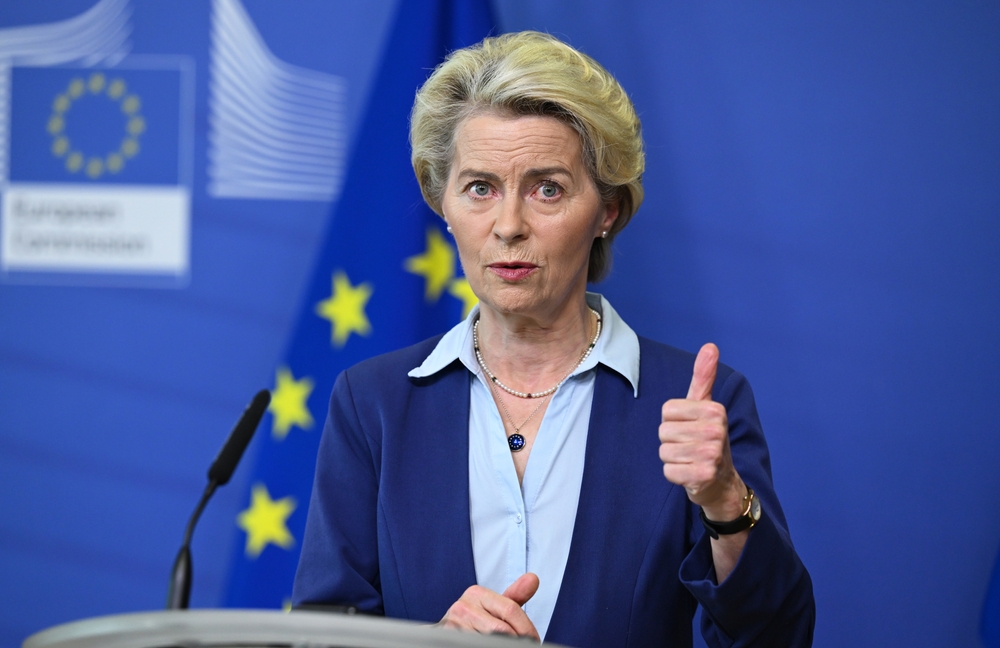
    European Commission President Ursula von der Leyen raised it during her State of the EU address.
    She suggested using profits from frozen Russian assets to help fund Ukraine’s resistance.
    Her speech offered political clarity but very little technical detail.
    She argued Russia should pay for the destruction it caused.

    German Chancellor Friedrich Merz soon amplified the proposal.
    He endorsed it in a Financial Times opinion article.
    He presented approval as both realistic and politically necessary.
    Many diplomats felt caught off guard by his confidence.
    Some accused Germany of pushing the bloc without proper consultation.

    The Commission later circulated a short document outlining the concept.
    Belgium reacted strongly to that move.
    The country holds about €185 billion of frozen Russian assets through Euroclear.
    Belgian officials felt sidelined despite carrying the largest financial exposure.

    De Wever publicly warned against spending Europe’s strongest leverage over Moscow.
    He demanded full legal certainty and shared financial responsibility.
    An October summit failed to deliver agreement.
    Leaders asked the Commission to explore several funding options instead.

    Why the Plan Finally Fell Apart

    In November, von der Leyen presented three funding options to leaders.
    They included voluntary contributions, joint debt, and the reparations loan.
    She acknowledged that none of the choices offered an easy solution.
    Her letter tried to address Belgium’s concerns with stronger guarantees.
    It also warned of reputational and financial risks for the eurozone.

    External events briefly revived support for the proposal.
    US and Russian officials circulated a controversial peace framework.
    That plan suggested exploiting frozen assets for shared commercial benefit.
    European leaders rejected the idea outright.

    Momentum collapsed again after De Wever sent a sharply critical letter.
    He described the proposal as fundamentally flawed and potentially dangerous.
    In December, the Commission released detailed legal texts.
    The European Central Bank refused to provide liquidity support.

    Euroclear criticised the plan as fragile and risky for investors.
    Several northern and eastern states defended the proposal publicly.
    Opposition widened when Italy, Bulgaria, and Malta raised objections.
    At the 18 December summit, leaders faced unlimited guarantees and massive liabilities.

    They abandoned the reparations loan and chose joint debt instead.
    De Wever said the outcome confirmed his expectations.
    He argued that no financial solution comes without real costs.

    Rachel Maddow
    • Website
    • Facebook

    Rachel Maddow is a freelance journalist based in Chicago, USA, with over 20 years of experience covering Politics, World Affairs, Business, Health, Technology, Finance, Lifestyle, and Culture. She holds a degree in Political Science and Journalism from Stanford University. Over the course of her career, she has contributed to outlets including MSNBC, The New York Times, and The Washington Post. Recognized for her in-depth reporting and compelling storytelling, Rachel delivers accurate and timely news that keeps readers informed on both national and international developments.

    Keep Reading

    Global Tensions Take Center Stage as Economic Warfare Becomes Top World Risk

    Tensions Boil Over as US, Israel and Iran Edge Closer to Confrontation

    U.S. Navy Steps Up Caribbean Crackdown With New Tanker Seizure

    Night Protests Rock Tehran as Calls for Change Grow Louder

    Young Leaders Push Gun Safety Legislation

    Greenland at the Center of a Growing U.S. Power Play

    Add A Comment
    Leave A Reply Cancel Reply

    Latest News

    MrBeast’s Beast Games Tops U.S. Charts

    January 14, 2026

    Google Joins the $4 Trillion Club as AI Fever Pushes Tech to New Heights

    January 13, 2026

    Diageo May Sell Chinese Assets as New CEO Moves to Streamline Global Portfolio

    January 13, 2026

    Same-Sex Behaviour in Primates May Strengthen Social Bonds Under Stress, Study Suggests

    January 13, 2026
    Trending News

    Unlocking the Secrets of Cocoa Fermentation

    Technology & Innovation August 18, 2025

    Prof. David Salt and his team discovered how microbes impact cocoa bean fermentation and chocolate…

    Declining Sperm Counts Tied to Chemicals in Plastics

    August 19, 2025

    Arctic Sea Ice Decline Hits Pause

    August 20, 2025

    Duolingo Apologises for Lesson Criticising Rowling

    August 21, 2025

    Latest Posts

    BP Braces for Up to $5bn Green Energy Write-Down as Strategy Shifts Back to Fossil Fuels

    January 14, 2026

    Global Tensions Take Center Stage as Economic Warfare Becomes Top World Risk

    January 14, 2026

    MrBeast’s Beast Games Tops U.S. Charts

    January 14, 2026

    Categories

    • Business & Economy
    • Culture & Society
    • Health
    • Entertainment
    • Sports
    • Media
    • News
    • Opinion
    • Real Estate
    • Environment & Sustainability
    • Technology & Innovation
    • Travel & Tourism

    IMPORTANT LINKS

    • Contact Us
    • Privacy Policy
    • Terms and Conditions
    • Disclaimer
    • Imprint

    © 2025 Chicagotimesherald.com . All Rights Reserved.

    Type above and press Enter to search. Press Esc to cancel.
