


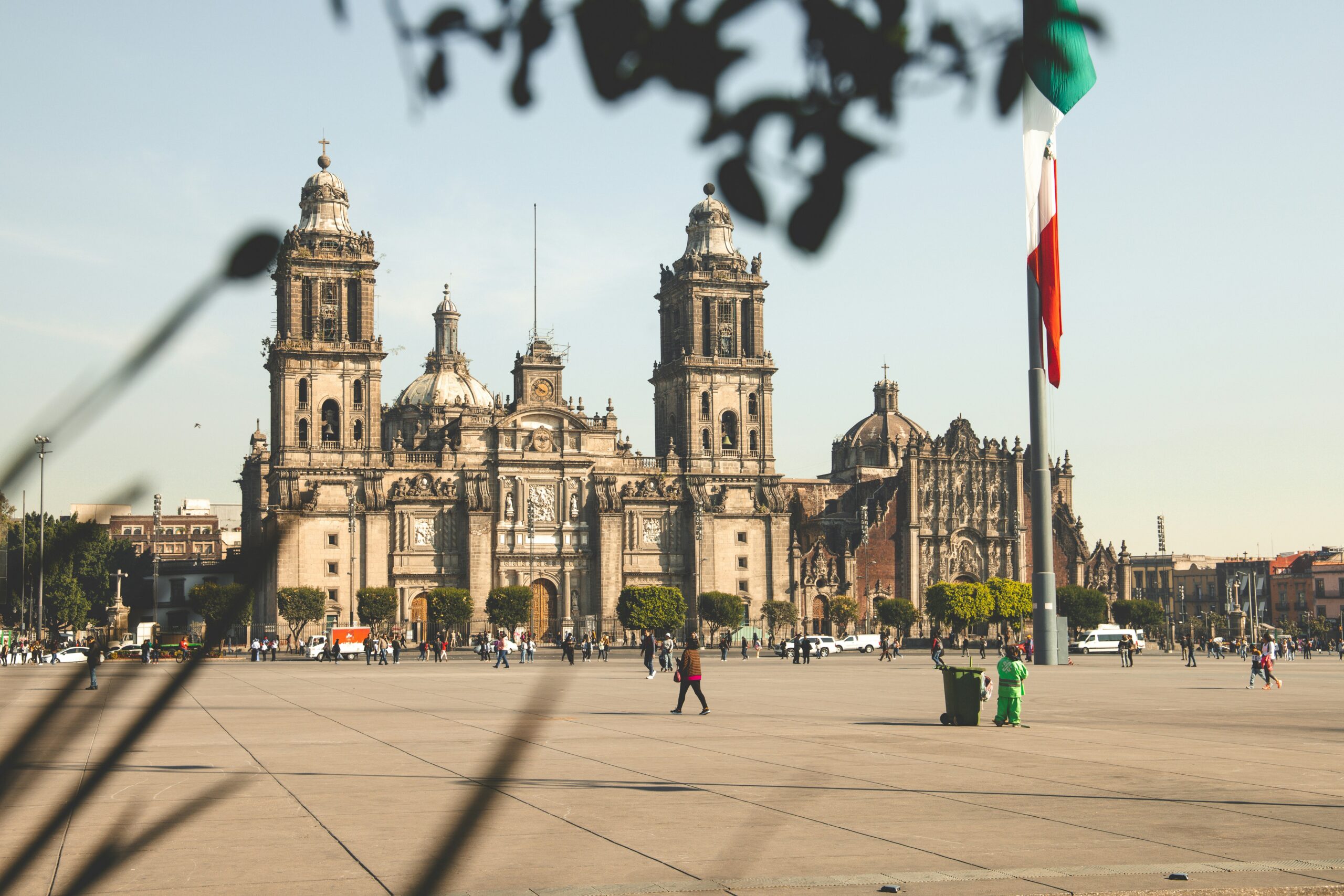
Thousands of young people surged through Mexico City’s streets on Saturday to denounce corruption, rising violence, and government inaction. Demonstrators marched from the Angel of Independence toward the Zócalo in a coordinated nationwide effort that involved 52 Mexican cities and international solidarity actions in the United States, Canada, Germany, and the Netherlands. What began as a peaceful display of unity ended in a chaotic confrontation that left more than 120 people injured and roughly 20 detained.
The assassination of Uruapan mayor Carlos Manzo on 1 November ignited the movement. Manzo had repeatedly demanded federal assistance to combat organized crime in Michoacán, but officials ignored his warnings. His murder became a rallying point for young people who believe the political system has collapsed under corruption and refuses to respond to public suffering.
Masses of students, families, professionals, activists, and citizens frustrated with insecurity converged on the capital. Mexico City Security Secretary Pablo Vázquez confirmed dozens of injured civilians and officers, emphasizing that the situation escalated rapidly once the crowd reached the historic center.
Confrontation at the National Palace
The march maintained peaceful momentum until it arrived at the Zócalo, where a black-clad group identified as the “black bloc” began attacking protective barriers surrounding the National Palace. They struck the fencing with stones, metal rods, and hammers until it collapsed. Police intervened with tear gas and fire extinguishers, and the standoff intensified.
Emergency teams treated 60 officers on-site and hospitalized 40 more, four of whom required specialized medical attention. Paramedics assisted 20 injured civilians at the scene. Authorities detained a group of individuals for violent conduct and processed others for administrative violations.
Investigators, in coordination with the Mexico City Attorney General’s Office, began reviewing footage to identify additional participants responsible for property damage and aggression. President Claudia Sheinbaum condemned the violence and stressed the need for peaceful mobilization, even as she minimized the scale of the protests by claiming only “very few young people” took part despite overwhelming turnout.
A Movement Without Parties, Powered by a New Generation
Mexico’s Generation Z defines itself as civic, non-partisan, and grounded in collective disillusionment. Their message rejects political labels entirely: “We are neither left nor right; we are the generation that refuses to bow our heads.”
Before the nationwide marches, organizers released a renewed petition outlining a series of civic priorities that reflect rising youth frustration. Their updated demands include:
- Creating independent recall elections triggered solely by citizen initiative.
- Holding immediate public elections to replace officials removed through recall.
- Shielding all recall and replacement processes from political party involvement.
- Forming independent citizen councils to oversee appointments to regulatory bodies.
- Modernizing the judicial system to guarantee swift and impartial justice.
- Establishing permanent, publicly accessible anti-corruption monitoring panels.
- Prioritizing community-based public safety solutions over military involvement.
- Enforcing full transparency for government contracts, budgets, and spending.
- Expanding scholarships, vocational training, and early-career opportunities.
- Implementing affordable housing protections to curb displacement and gentrification.
- Including respected civic leaders and academics in oversight groups.
- Opening nationwide public assemblies to refine and expand these demands.
This uprising aligns with a global pattern of Generation Z activism. In nations like Nepal, Mongolia, Peru, Morocco, Paraguay, Bangladesh, and Indonesia, young people organized digital-first protest movements using platforms such as TikTok, Instagram, and X. These decentralized efforts respond to shared concerns: economic instability, corruption, declining living standards, and governments that appear disconnected from the realities of younger generations.
While outcomes vary globally—with some youth movements toppling governments—Mexico’s Gen Z is calling for something deeper: a structural transformation in how the nation distributes power, delivers justice, and protects its citizens.

